![Order made] Money envelope bag - cat in the dust (mauve)](http://shop.tatsumura.co.jp/cdn/shop/products/06281503_5b347a3f12516_{width}x{height}_crop_center.jpg?v=1631982354)
*The pattern may be different from the image shown due to the cutting process
![Order made] Money envelope bag - cat in the dust (mauve)](http://shop.tatsumura.co.jp/cdn/shop/products/06281503_5b347a46dca4e_c8422ad2-7d5d-4455-9845-7ce69f769637_{width}x{height}_crop_center.jpg?v=1634098126)
![Order made] Money envelope bag - cat in the dust (mauve)](http://shop.tatsumura.co.jp/cdn/shop/products/06281503_5b347a3f12516.jpg?v=1631982354)
![Load image into Gallery viewer, Order made] Money envelope bag - cat in the dust (mauve)](http://shop.tatsumura.co.jp/cdn/shop/products/06281503_5b347a3f12516_1024x1024@2x.jpg?v=1631982354)
![Load image into Gallery viewer, Order made] Money envelope bag - cat in the dust (mauve)](http://shop.tatsumura.co.jp/cdn/shop/products/06281503_5b347a46dca4e_c8422ad2-7d5d-4455-9845-7ce69f769637_1024x1024@2x.jpg?v=1634098126)
Detail
| Product : | Order made] Money envelope bag - cat in the dust (mauve) |
|---|---|
| Type : | 金封 |
| Size (cm) : | W12.0×H20.0 |
| Tags : | Egypt、 Formal Collection、 Wrapping available、 Japanese Accessories、 Pattern_Cat in dust、 cat、 Money Bag、 |
| Other : | The pattern may be different from the image shown due to the cutting process. Please understand this in advance. |
| Other : | Gift wrapping service available |
Reviews


Description
It can be easily used like a book cover to wrap and insert a money envelope. Not only does it prevent the kinship from getting dirty or bent, but it also makes it easier to take out the kinship when handing it to the receptionist at the venue.
It is very useful to have an abbreviated kinship envelope with you in case of emergency.
Patterns
Ejiputo-no Neko(Egyptian Cat)
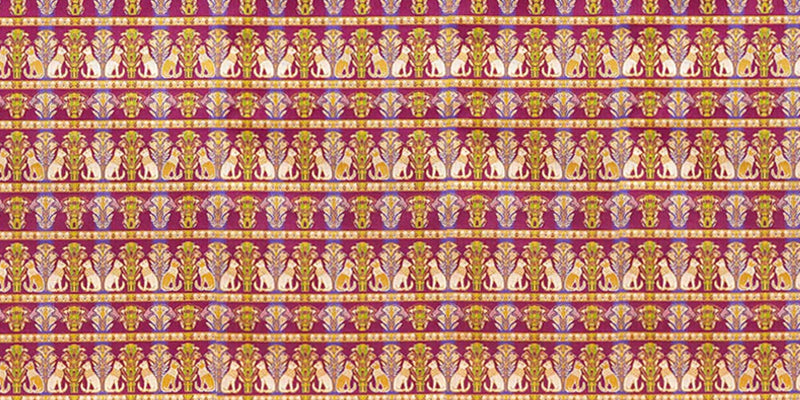
The cat design of this brocade is modeled from a bronze statue made in the Saite period in Ancient Egypt (663 BC - 341 BC), when is thought to be the Renaissance era in their arts. During the Saite period, the architecture flourished and huge palaces and temples were built. The Karnak Temple is one of them where The Great Hypostyle Hall was installed. In the Hall, they built large number of palm-shaped pillars on which papyrus and lotus flowers were painted.
We made the pattern of such decorated pillars, plus cats facing each other. Cats were loved among people in those days, and thought to have loved music and dancing. They also were treated as the "deity of fertility" and the "embodiment of goddess".
We have woven into warp-patterned brocade thinking of the cats and the arts of Ancient Egypt.
Related Related products
-
Coin Container (Fuku-neko Kohshi-mon)
![]()

- Regular price
- ¥3,300 (Tax included.)
- Sale price
- ¥3,300 (Tax included.)
- Regular price
-
- Unit price
- per
Sold out -
Coin Container (choker-no-neko)
![]()

- Regular price
- ¥8,250 (Tax included.)
- Sale price
- ¥8,250 (Tax included.)
- Regular price
-
- Unit price
- per
Sold out -
Pencil Case(Fuku-neko Kohshi-mon)
![]()

- Regular price
- ¥3,300 (Tax included.)
- Sale price
- ¥3,300 (Tax included.)
- Regular price
-
- Unit price
- per
Sold out -
Pencil case(Chiku-rin Neko Ysunagi-mon Nishiki)
![]()

- Regular price
- ¥3,300 (Tax included.)
- Sale price
- ¥3,300 (Tax included.)
- Regular price
-
- Unit price
- per
Sold out