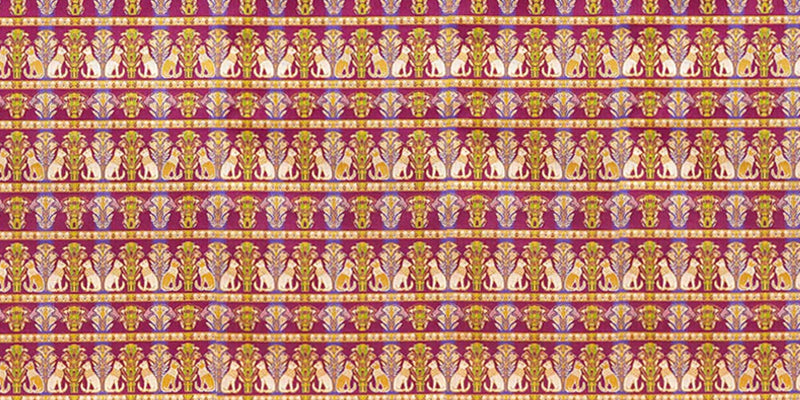
*The pattern may be different from the image shown due to the cutting process


Detail
| Product : | Sukiya Bukuro (A Pouch) (Tea-things) (Egypt-no-neko) |
|---|---|
| Type : | Sukiya Pouch |
| Size (cm) : | W21.0 x H15.0 x D3.0 |
| Tags : | 130th anniversary object-3、 Egypt、 Wrapping available、 Pattern_Cat in dust、 cat、 Tea utensils、 |
| Other : |
Please note that due to cutting, the pattern placement may differ from the displayed image. Product photos may appear slightly different in color from the actual item due to lighting conditions and your device's display settings. |
| Other : | Gift wrapping service available |
Reviews


Description
This is a small pouch designed to hold all the accessories needed for a tea ceremony. It can be coordinated with matching fukusa and kaishi pouches. Its unique pattern also makes it a stylish choice for everyday use as a secondary bag.
We’ve crafted this item with meticulous attention to detail, even in the hidden parts. For those who don’t practice the tea ceremony, it can also be used as a makeup pouch or a “bag-in-bag.” It’s the perfect size for keeping small items that would otherwise scatter inside your bag neatly organized.
*Features the “Tatsumura Original Name” on the lining.
*Please note that the fastener may differ from the one shown in the photo.
■ Product Tips: “Sukiya Bag” Edition

Our popular “Sukiya Bag.” While originally designed as a tea ceremony accessory, it’s highly praised for its versatility beyond that purpose.
Click here to continue reading the “Sukiya Bag” edition of our Product Tips series.
Patterns
Ejiputo-no Neko(Egyptian Cat)
Related Related products
-
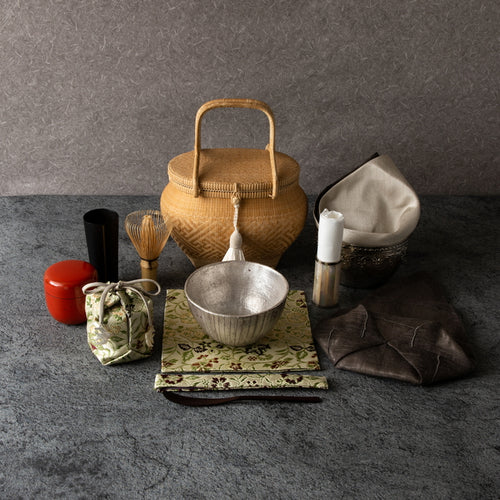
Tea Basket "BANZAIRAKU" (Kamon Kougei) [WEB Limited]
![]()
- Regular price
- ¥396,000 (Tax included.)
- Sale price
- ¥396,000 (Tax included.)
- Regular price
-
- Unit price
- per
Sold out -
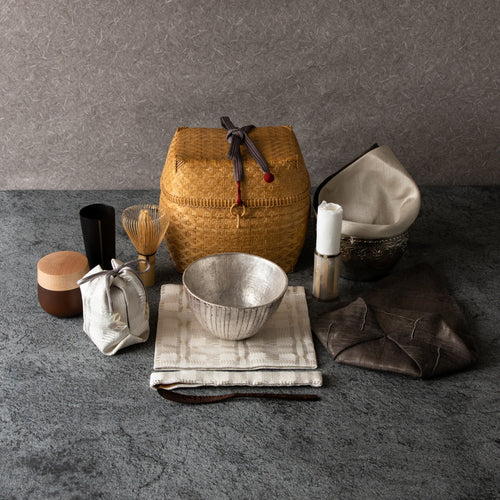
Tea Basket "TAMATEBAKO" (Kamon Kougei) [WEB Limited]
![]()
- Regular price
- ¥198,000 (Tax included.)
- Sale price
- ¥198,000 (Tax included.)
- Regular price
-
- Unit price
- per
Sold out -
Tea Basket "KIRARA" (Kamon Kougei) [WEB Limited]
![]()

- Regular price
- ¥105,600 (Tax included.)
- Sale price
- ¥105,600 (Tax included.)
- Regular price
-
- Unit price
- per
Sold out -
Antique Furoshiki—Grape and Arabesque Pattern Brocade
![]()

- Regular price
- ¥6,050 (Tax included.)
- Sale price
- ¥6,050 (Tax included.)
- Regular price
-
- Unit price
- per
Sold out